# Double-Distribution Trend Day
* While this day is a trending day, it in no way has the confidence or conviction of a Trend Day.
* Instead, this type of day is characterized by its indecisive nature at the session's outset.
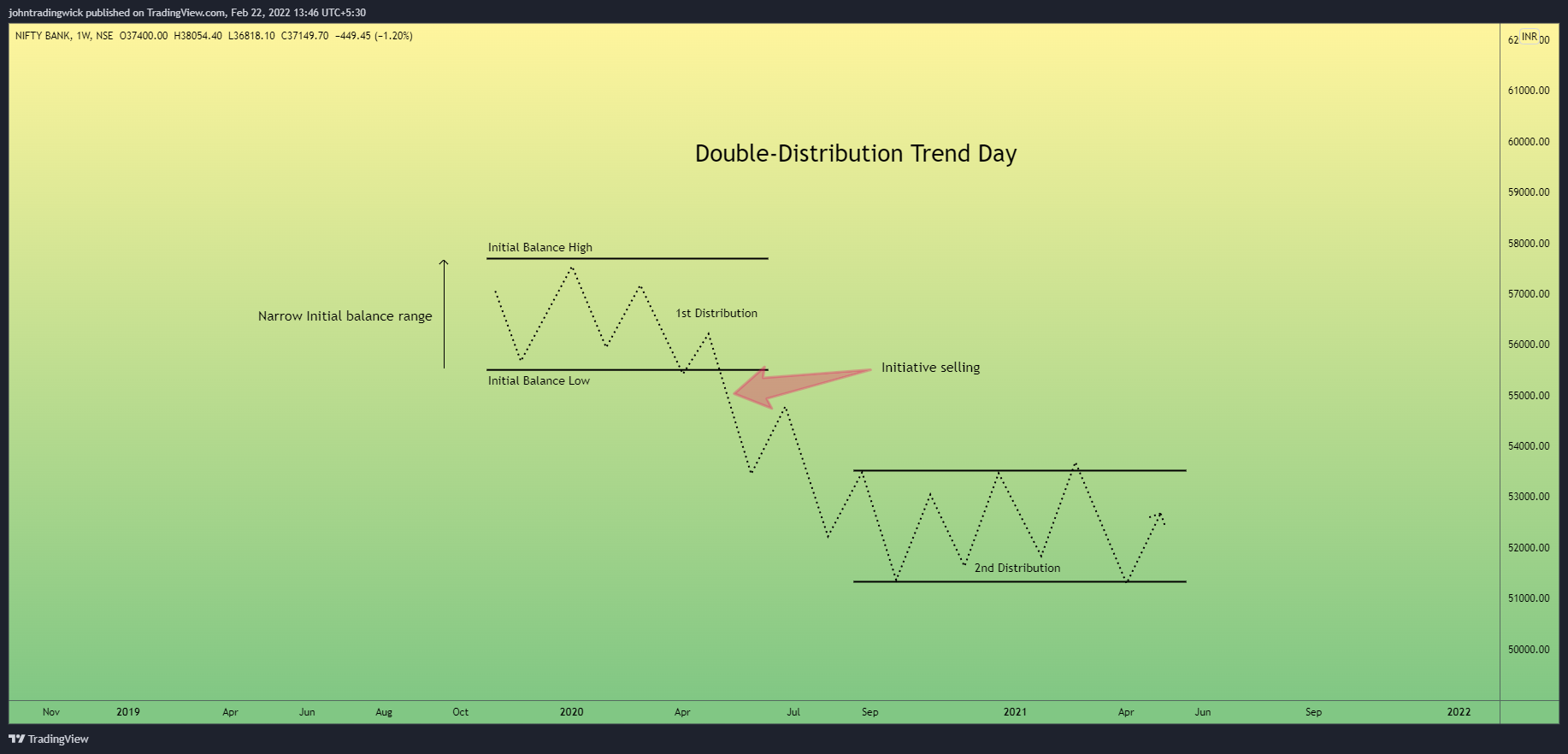
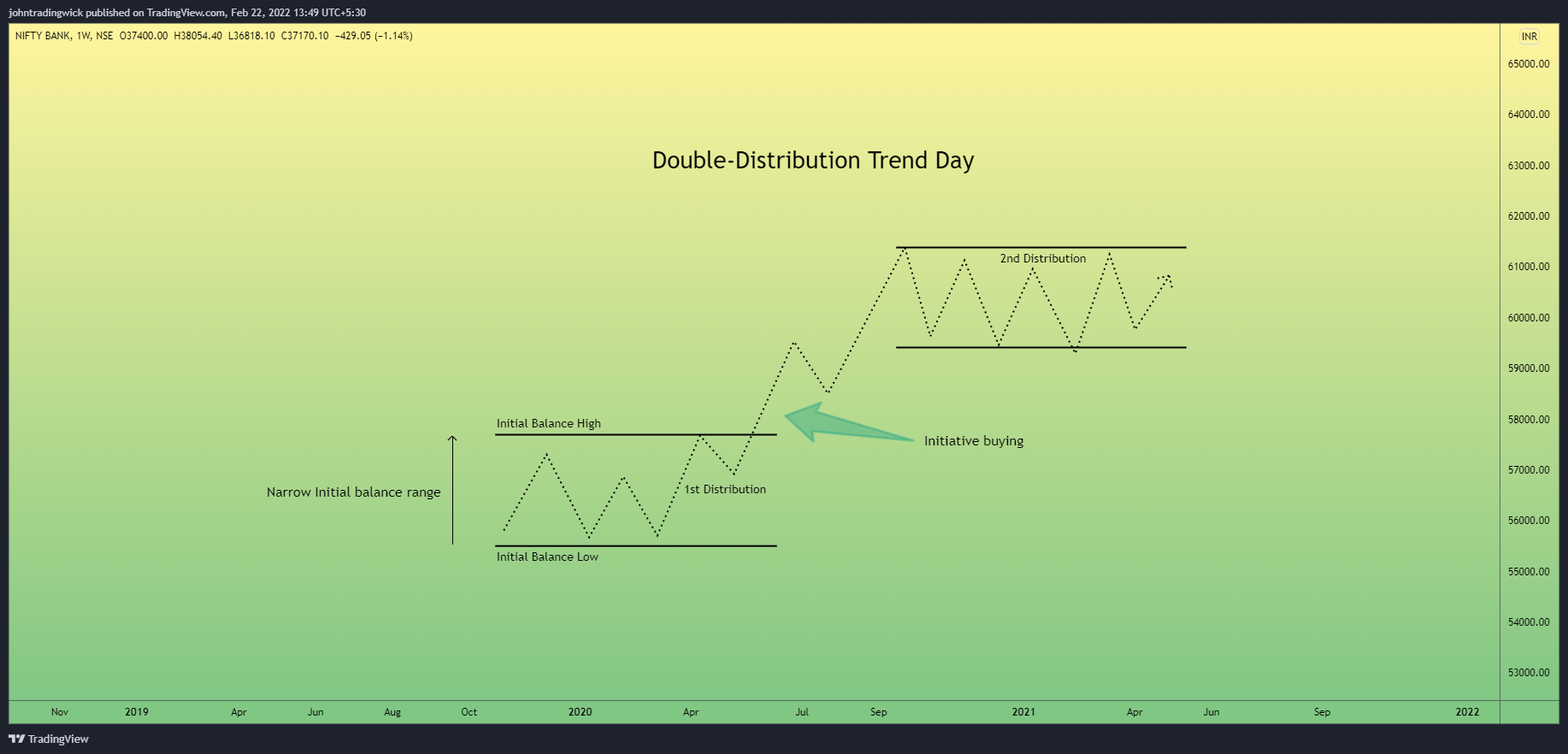
* During this type of day, the market will usually quietly open the session-quietly, trading within a fairly tight range for the first hour or two of the session, thereby creating a narrow initial balance.
* The initial balance is traditionally defined as the price range of the first hour of the day.
* If the initial balance is too narrow, the price will break free from the range and auction toward new value, creating range extension, which is any movement outside the initial balance.
* After the initial balance of the Double-Distribution Trend Day has been defined, the price will break out from the range and auction toward new value, forming a second price distribution. This is the market's attempt to confirm whether a new value has been established.
* Double-Distribution Trend Day opens the session quietly, trading within a tight range that can be viewed as the day's "warm-up" period. Eventually, the price breaks free of the range and begins trending toward new value, igniting initiative buying or selling.
* Once the market finds new value, it builds another range before ending the day.
* The ranges formed at the beginning and end of the day are where the term "double-distribution" comes from, as the bulk of the day's volume resides at one of these extremes, essentially forming a double distribution of trading activity.
* The initial balance is the base for any day's trading and is extremely important to Double-Distribution Trend Day.
* A narrow initial balance is easily broken, while a wide one is harder to break. The fact that the initial balance is narrow on this type of day indicates a good possibility of a breakout from the initial range, indicating that you will likely see a move toward a new value.
* The narrow initial balance at the beginning of the Double-Distribution Trend Day indicates that either buyers or sellers will eventually overwhelm one side.
* Once the direction is decided, the price will move toward a new area of value since initiative market participants drive it.